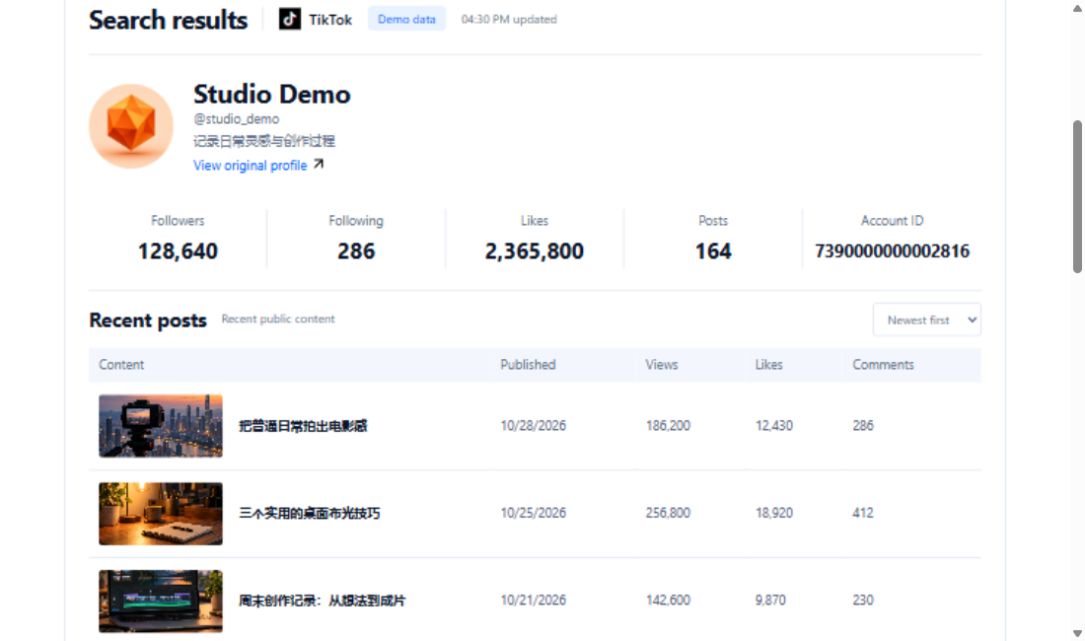
A successful video can make you want to copy its structure immediately. The useful question is what problem it solves and what evidence makes the answer convincing.
Consider the teaching scenario “Why does pour-over coffee taste bitter?” This is an illustrative project, not a report of measured performance or a promise of future reach.
Pick three comparable examples
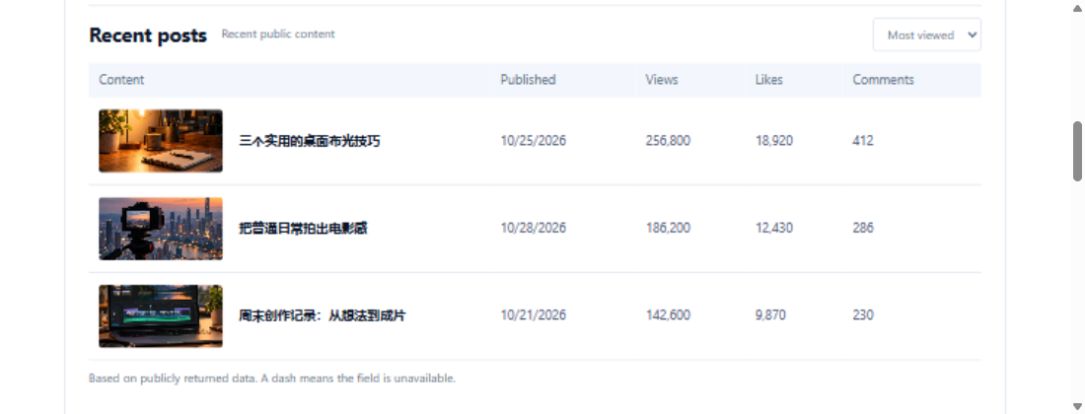
Avoid comparing a large account’s year-old video with a new account’s post from thirty minutes ago. Fix a topic and publication window. Save each original link, publication time, observation time and available metrics. If the sample is too small, keep the conclusions qualitative.
Close the spreadsheet and watch the video
On the first pass, watch the opening: does it ask why coffee tastes bitter or show two different cups first? On the second pass, examine the evidence: are temperature, grind size and timing controlled? Then read the comments: are people asking about equipment or how to adjust a recipe?
These observations require viewing the source or working from a sourced transcript. A video-details endpoint does not automatically provide a transcript. A title alone is not enough for an AI to reconstruct spoken content.
Design a different experiment
| Observed approach | Your own experiment |
|---|---|
| Show the difference immediately | Film two grind sizes using your own beans |
| Explain one variable at a time | Change only temperature and document the other conditions |
| Answer repeated questions | Publish your own recipe table and step sequence |
Use your own footage and evidence. Keeping someone else’s lines and shots while changing the title does not create an original research project.
Use the metrics with a clear label
When both likes and views exist, calculate a like-to-view ratio and record the observation time. It has no universal success threshold and is not a completion rate. If completion data is unavailable, leave that field empty.
Finish with a source list, two supported observations and one original idea to test. After publishing, you will know which hypothesis to revisit.
Record the public details with an API
The following request retrieves one TikTok video. Confirm the content ID first. Available fields depend on the actual response.
Request URL and parameters
GET https://api.trmesh.com/openapi/api/v1/tiktok/app/v3/fetch_one_video
| Parameter | Type | Required | Meaning |
|---|---|---|---|
aweme_id |
string | Yes | Video id |
Run the Python example
Install requests and set TRMESH_API_TOKEN in your environment. Replace the sample identifiers with the public object you intend to inspect. Example IDs may no longer be available.
import os
import requests

# Read your own developer key from the server environment.
url = "https://api.trmesh.com/openapi/api/v1/tiktok/app/v3/fetch_one_video"
params = {
    "aweme_id": "7350810998023949599"
}
response = requests.get(
    url, params=params, timeout=30,
    headers={"Authorization": f"Bearer {os.environ['TRMESH_API_TOKEN']}"},
)
response.raise_for_status()
payload = response.json()
print(payload)  # Inspect the actual response before mapping fields
Endpoint documentation · Free profile tool
API calls use your TRMesh account allowance. Check the endpoint price before running a script.